2026 AccessAbility Awards: Five Honorees, One Shared Commitment
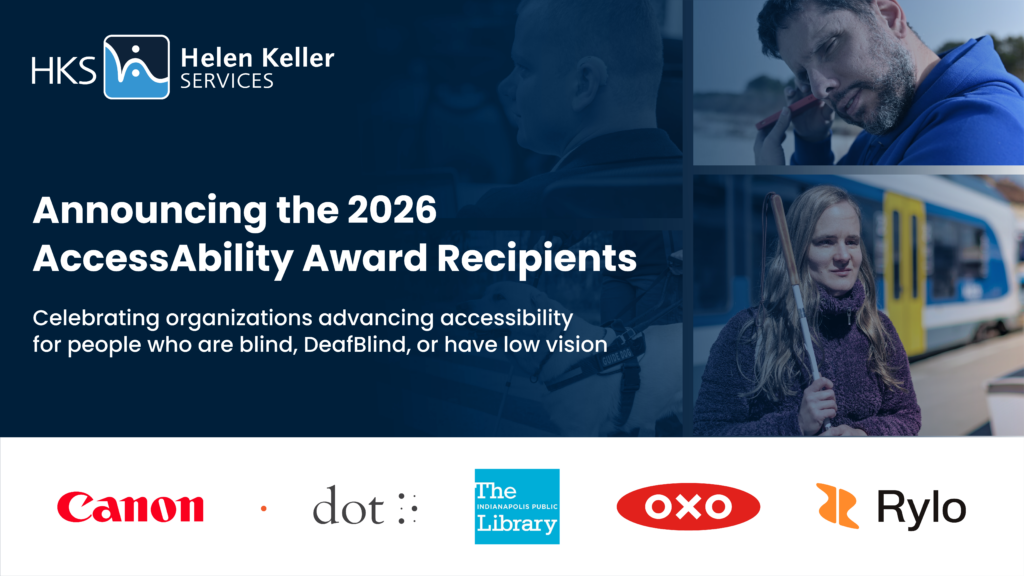
Five organizations advancing accessibility for people who are blind, have low vision, or are DeafBlind were honored on October 9 at the Helen Keller National Center in Sands Point.
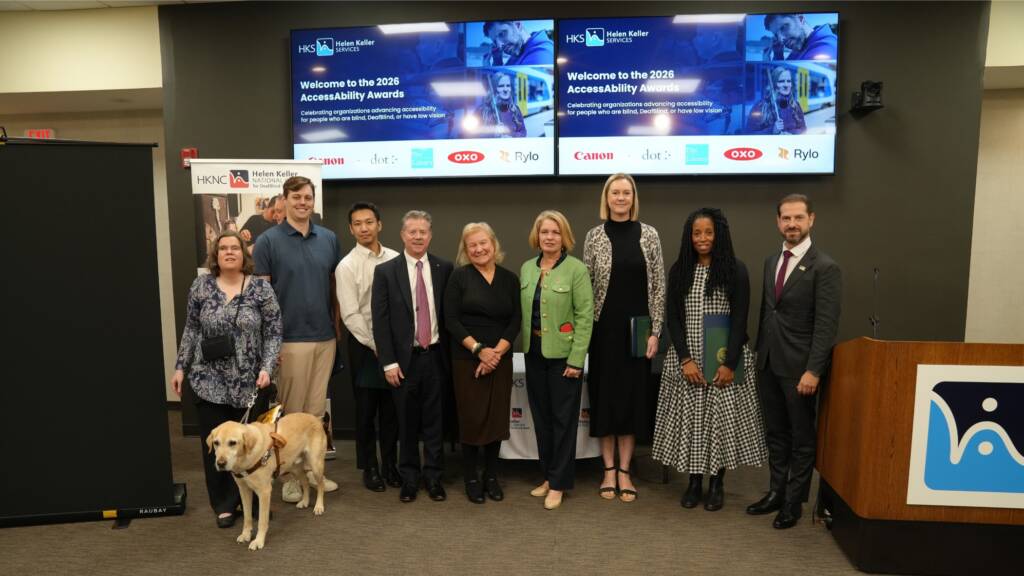
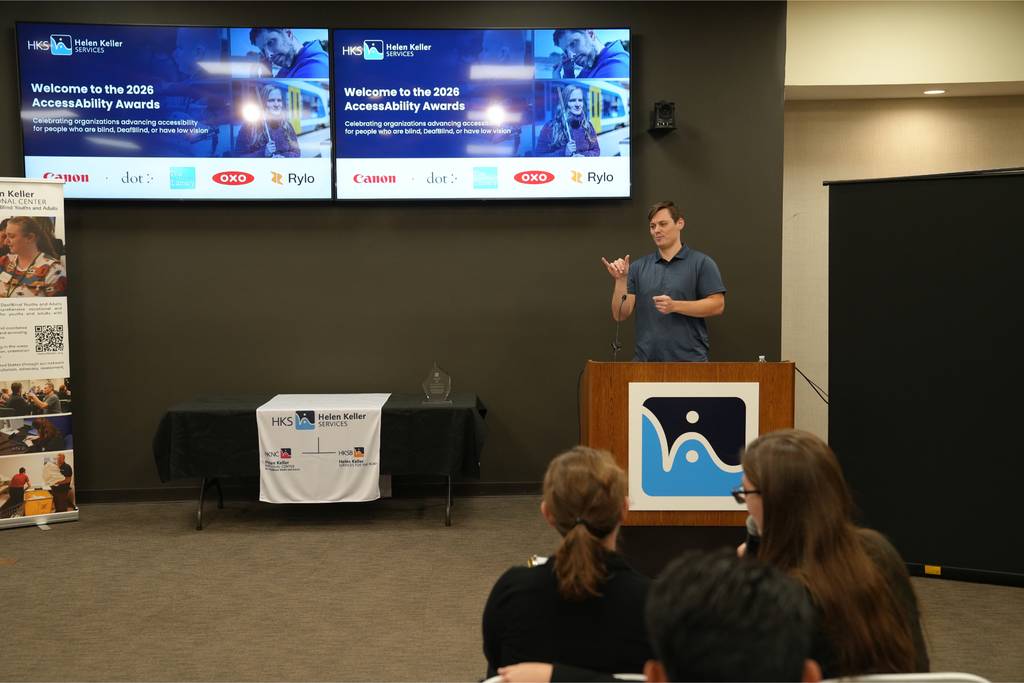
On the afternoon of October 9, honorees, guests, and Helen Keller Services staff gathered at the Helen Keller National Center in Sands Point for the 2026 AccessAbility Awards. Teams from Canon U.S.A., Dot Inc., OXO, Rylo, and the Michigan Road Branch of The Indianapolis Public Library joined us for an afternoon built the way every HKS event is built: presentations interpreted in ASL, honoree videos audio described for the room, and a crowd that reflected the community these awards exist to serve.
Dr. Susan Ruzenski, CEO of Helen Keller Services, opened the ceremony by thanking the honorees for showing “exactly what accessibility looks like in action.” She then shared a quote from an unknown author that became the thread running through the whole afternoon: “Accessibility is not a privilege; it is a fundamental right. And when we design for everyone, we unlock the full potential of humanity.”
From there, John Filek, Executive Director of the Helen Keller National Center, introduced each honoree with a short video, followed by a presenter from across HKS who knows firsthand what that work means for the people we serve.
The 2026 Honorees
OXO opened the program. Maricar Marquez, Supervisor of the Independent Living Department at the Helen Keller National Center, presented the award, signing her remarks in ASL with voice interpretation. She walked through the details that matter in a kitchen: measuring cups with high-contrast markings for people with low vision, peelers with secure, comfortable grips, and bowls that stay in place while stirring. “These might seem like small, insignificant details,” she said. “For a DeafBlind, blind, or visually impaired person, these small details can open doors to greater independence.” Accepting on behalf of OXO, Françoise Vielot, Vice President of Product Development, traced that thinking back to the original Good Grips Swivel Peeler, designed for founder Sam Farber’s wife, who has arthritis. “What started as a solution for one person ultimately improved the experience for millions,” she said. “Accessibility is not a feature we add at the end of a project. It is a principle that guides our thinking from the very beginning.”
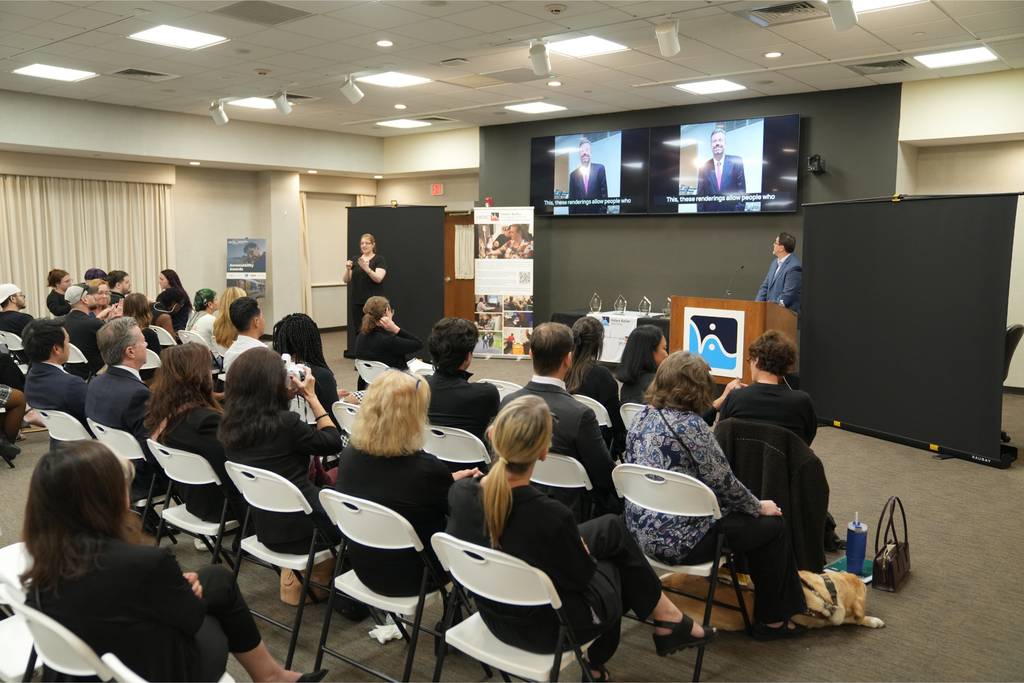
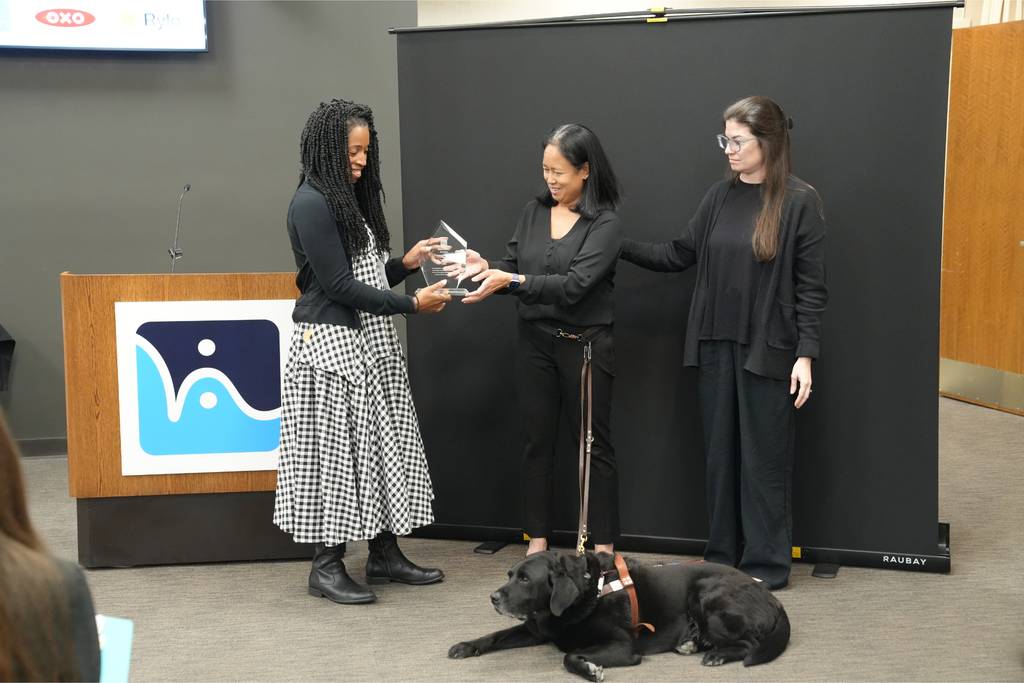
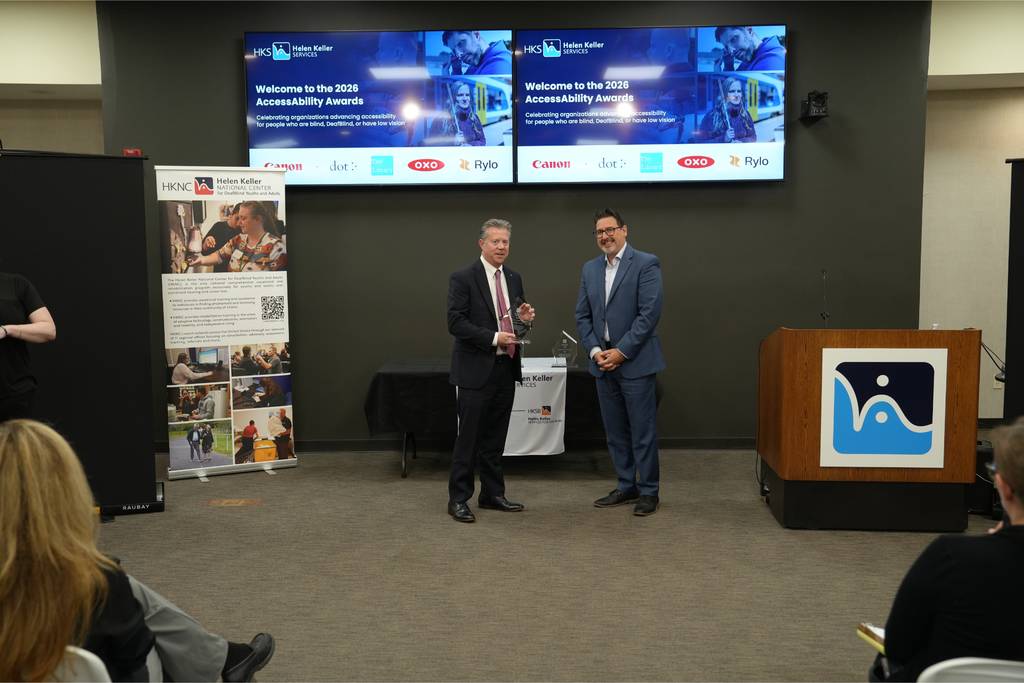
Canon U.S.A., headquartered on Long Island in Melville, was honored for printing technology that transforms visual imagery into detailed tactile renderings. In a recorded presentation, Joseph DiNero, Director of Business Outreach at Helen Keller Services for the Blind, described what that technology makes possible: people who are blind, have low vision, or are DeafBlind exploring photographs and visual art that were previously out of reach. “It’s really opening doors to a world that was really just closed off,” he said. John Filek presented the award to Richard Reamer, Senior Director, Marketing, Large Format Printing Business Planning and Development at Canon U.S.A., who accepted on behalf of the company and credited its engineers, product teams, and partners. “Technology is only part of the solution,” Richard said. “True accessibility begins with listening and working closely with the community to understand what people need.”
Dot Inc. received its award from Megan Dausch, Accessibility Specialist at Helen Keller Services, who led this year’s selection committee. Megan explained how Dot Pad X lets a reader take in multiple lines of braille without constantly panning a single-line display, along with tactile maps, images, and diagrams. She also shared her own first experience with it: finally understanding what the icons on an iPhone home screen look like. Co-founder Ki Kwang Sung accepted on behalf of the Dot team, echoing the theme of the afternoon: “We believe that access to information, education, and technology should not be a privilege, but a fundamental right.” He described traveling to more than 20 states to learn what people truly needed, and said Tech Blitz at the Helen Keller National Center reminded the team “that the best innovation begins with listening.”
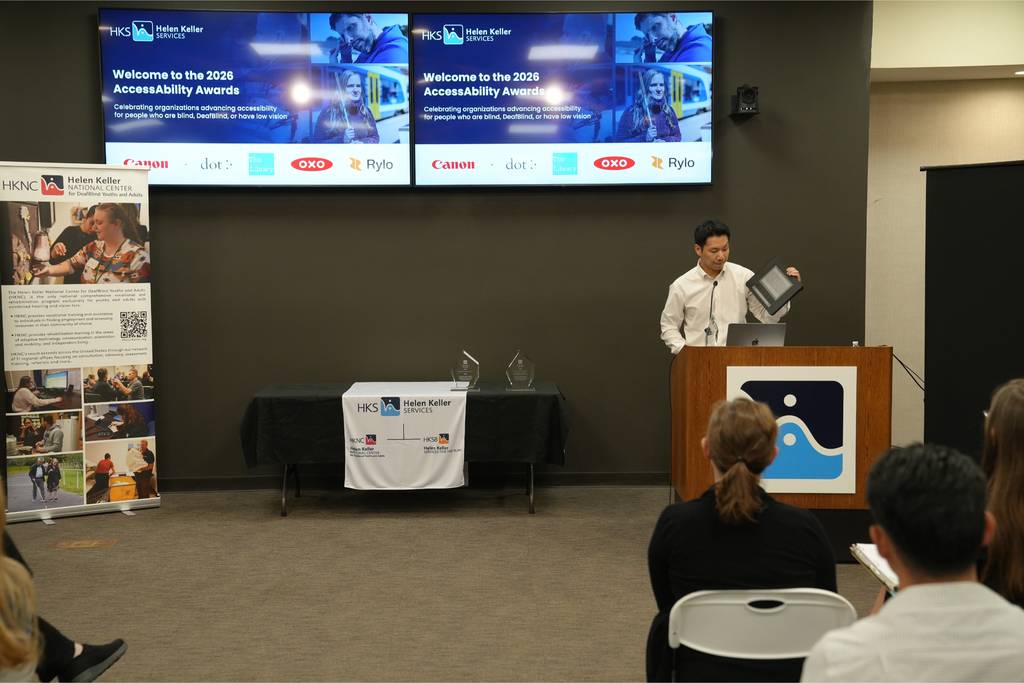
Rylo was presented by Jenee Allman, Older Adult Specialist at the Helen Keller National Center, in a recorded presentation. Jenee described how Rylo’s real-time messaging let her finish an important conversation with someone driving through heavy traffic, while he kept his eyes on the road. “The accessibility is right there in the product, without the need of a third person,” she said. Matt Sherman, Head of Community, accepted on behalf of Rylo, signing his remarks. He spoke about how differently communication access looks from person to person, whether through ASL, tactile communication, or captions. “It’s easy to assume there’s one problem to solve and one solution that will solve it,” he said. “The community has constantly reminded us otherwise.”
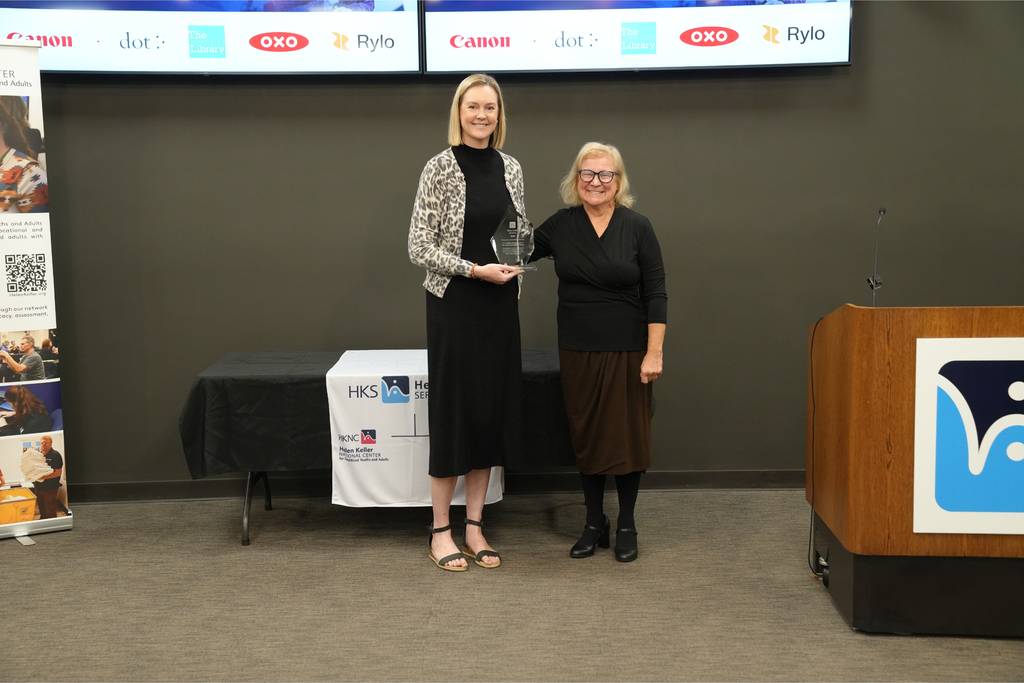
The Michigan Road Branch of The Indianapolis Public Library was the final honoree. Its video introduced Zakiya, who organizes and shelves books at the branch, along with Genevieve Barnes, DeafBlind Employment Specialist at the Helen Keller National Center. Dr. Ruzenski presented the award, noting that libraries “are really among the few places where every person is welcome to learn, to connect, to explore, and to participate, regardless of their age, income, background, or ability.”
Dr. Ruzenski pointed to the everyday tools that make the branch work: color-coded maps of the building, magnifiers, alphabet cards, whiteboards so communication doesn’t have to wait, accessibility settings configured at staff workstations, an ASL guide for colleagues, and interpreters at trainings, reviews, and even staff parties. Behind all of it, she said, is a team that keeps asking one question: “What do you need?” She also recognized Genevieve, who first reached out to the branch and worked alongside its team through the hiring process. Accepting on behalf of the branch, Branch Manager Bethany Allison thanked Genevieve and the interpreters who supported Zakiya’s interview, training, and onboarding. “Working with Genevieve and Zakiya helped to strengthen our team and organization,” she said, “as we learned more about ASL, communication, and making appropriate accommodations.”
Recognition from Local Leaders
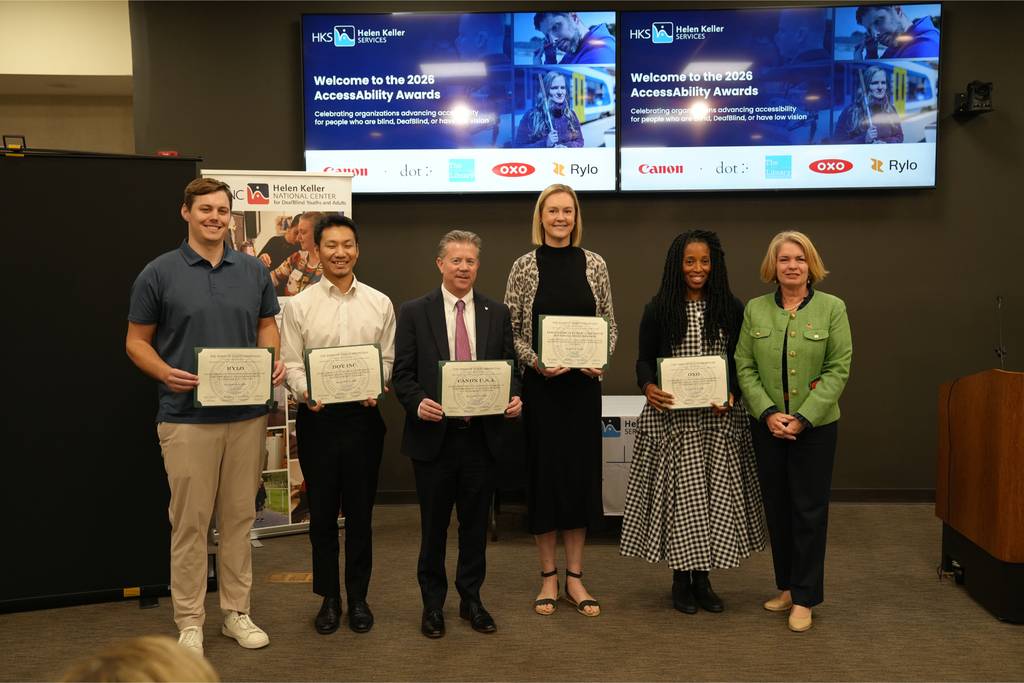
The afternoon also brought recognition from two local leaders. Town of North Hempstead Supervisor Jennifer DeSena, whose town is home to the Helen Keller National Center in Sands Point, presented citations to all five honorees, and the honoree representatives came forward together to receive them. Supervisor DeSena said she was proud of the work that happens at the Helen Keller National Center and of the organizations chosen this year, calling them “the best of the best.” She thanked the educators at Helen Keller Services and everyone who supported the honorees for making it possible for people to work and learn side by side. “We can all contribute and make our communities better,” she said.
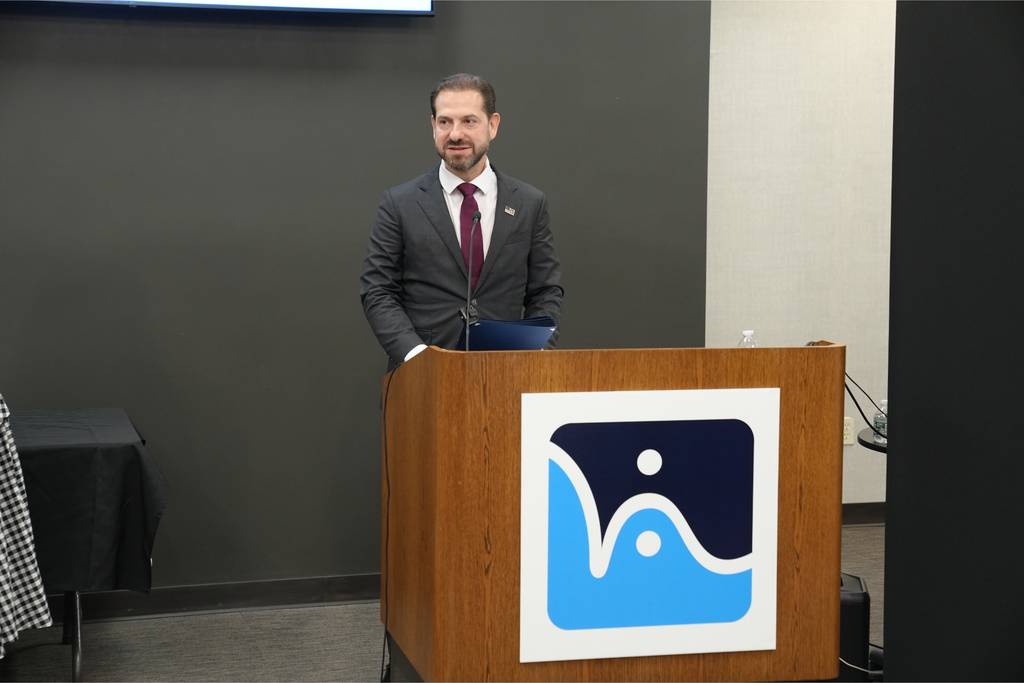
New York State Assemblyman Daniel Norber followed with citations of his own. He thanked the honorees for making sure that “accessibility, which is a human right, is not forgotten,” and that people with disabilities are not left behind but can thrive in their communities and give back. As new technology and AI continue to advance, he said, it is important to remember the people who can benefit from them, and to make sure they have the opportunity to contribute.
Congratulations to Our 2026 Honorees
This year’s honorees showed how many forms accessibility can take. For Canon and Dot, it is technology that puts photographs, maps, and full pages of braille within reach through touch. For OXO and the Michigan Road Branch, it is a mindset: designing everyday tools and workplaces so they work for everyone from the start. For Rylo, it is a commitment to listening to a community whose communication needs are never one-size-fits-all.
Since 2021, the AccessAbility Awards have honored more than 30 organizations, including Apple, United Airlines, LEGO, Microsoft, Netflix, Procter & Gamble, and Be My Eyes. You can explore past recipients on the AccessAbility Awards page and read more about this year’s honorees in our 2026 AccessAbility Awards announcement.
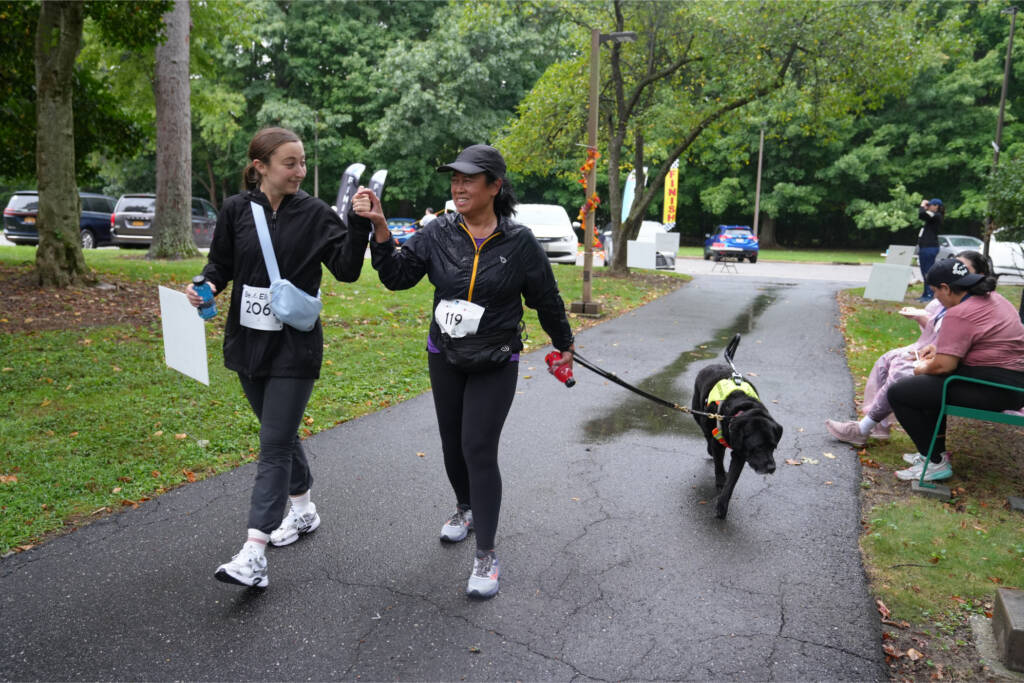
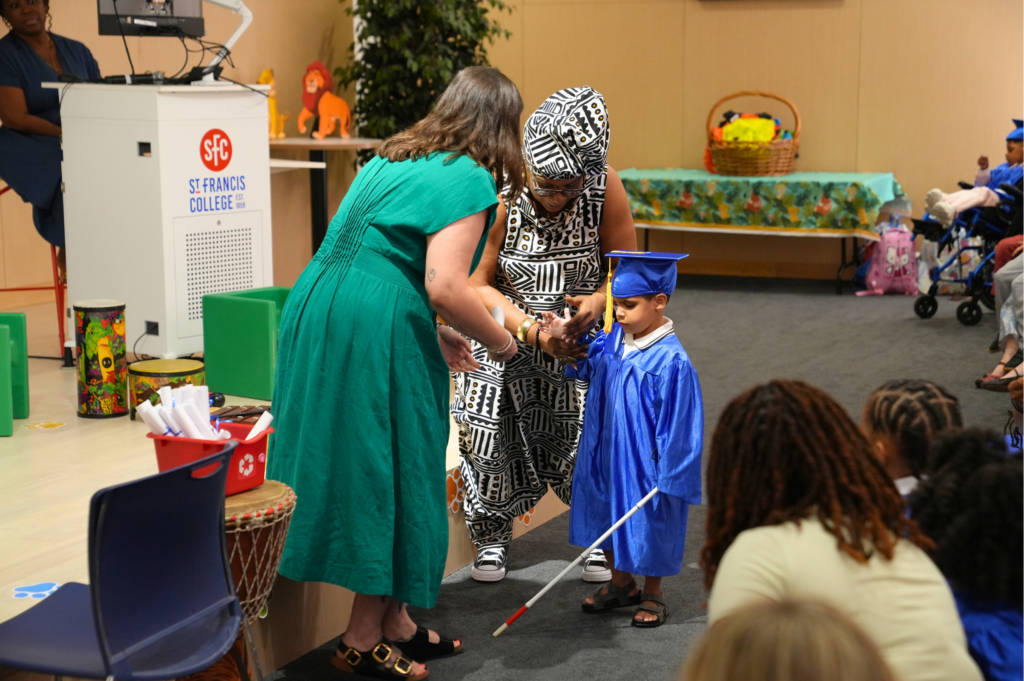
For Helen Keller Services, these awards grow out of our daily work with people who are blind, have low vision, or are DeafBlind as they build skills, pursue careers, and live independently in the communities they choose. Every organization that makes accessibility a priority widens those pathways to independence.
Thank you to our honorees and the teams who traveled to be with us, to our presenters, to the ASL interpreters and staff who made the afternoon accessible to everyone in the room, and to Supervisor DeSena and Assemblyman Norber for joining us. Congratulations to Canon U.S.A., Dot Inc., OXO, Rylo, and the Michigan Road Branch of The Indianapolis Public Library.