About the Program
The Children’s Learning Center is a specialized preschool program for children ages 3–5 with complex developmental needs.
Children who benefit from CLC services often need support across multiple developmental areas simultaneously, and benefit from the coordinated, team-based approach the program provides.
The CLC serves children with:
- Autism spectrum disorder
- Visual impairments (blind or low vision)
- Down syndrome
- Multiple disabilities
- Significant developmental delays
- Other conditions affecting learning, communication, mobility, or social development
A Complete Team, Working Together
At the CLC, children receive support from a full multidisciplinary team under one roof. Rather than coordinating separate appointments across multiple providers, families experience one coordinated program where specialists collaborate daily on each child’s development.
Our multidisciplinary team includes:
- Special Education Teachers trained in early childhood and developmental disability
- Teachers of the Visually Impaired who understand how vision affects all areas of learning
- Speech-Language Pathologists addressing communication, language, and feeding
- Occupational Therapists supporting fine motor skills and sensory processing
- Physical Therapists supporting gross motor development and body awareness
- Family Support Professionals ensuring parents have resources, training, and coaching
- A full-time Nurse providing medical support and coordination
- Social Work staff offering wraparound support for families navigating complex needs
The team shares observations, adjusts strategies collaboratively, and ensures that every aspect of a child’s development receives expert attention — cognitive, physical, social, emotional, and adaptive skills all progress together.
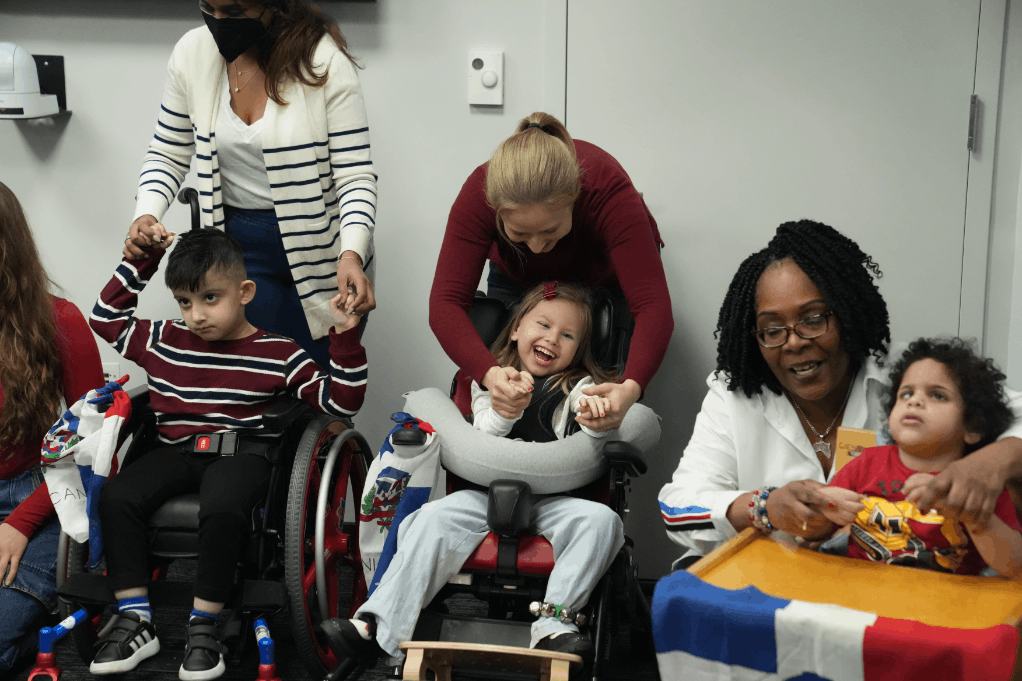
Education and Therapy, Side by Side
The CLC’s defining characteristic is integration. Education and therapy are not separate tracks, they are woven together in a single, specialized learning environment designed for young children with complex needs.
- Individualized support based on each child’s IEP and developmental profile
- Small, specialized classroom settings designed for this population
- State-of-the-art assistive and adaptive technology, including AAC devices, interactive smartboards, and specialized software
- Extended school year programming to maintain progress during summer months
- Accessible outdoor play areas and sensory gardens
- Purpose-built facilities designed specifically for children with complex developmental needs
The CLC’s expertise in vision loss and sensory processing benefits children across all developmental profiles — the environmental design, lighting, visual contrast, and adaptive tools that support children with visual impairments also create more effective learning environments for children with autism and other complex needs.
Families Are at the Center
HKS understands that families of children with complex developmental needs require more than excellent clinical services. They need genuine partnership, ongoing communication, and support that extends beyond the classroom.
CLC families receive:
- Regular communication about their child’s activities, progress, and any concerns
- Workshops on child development and strategies for supporting children with disabilities at home
- Coaching to reinforce developmental goals in daily routines
- Multilingual family support to ensure every family can fully participate
- Transition planning as children prepare for kindergarten
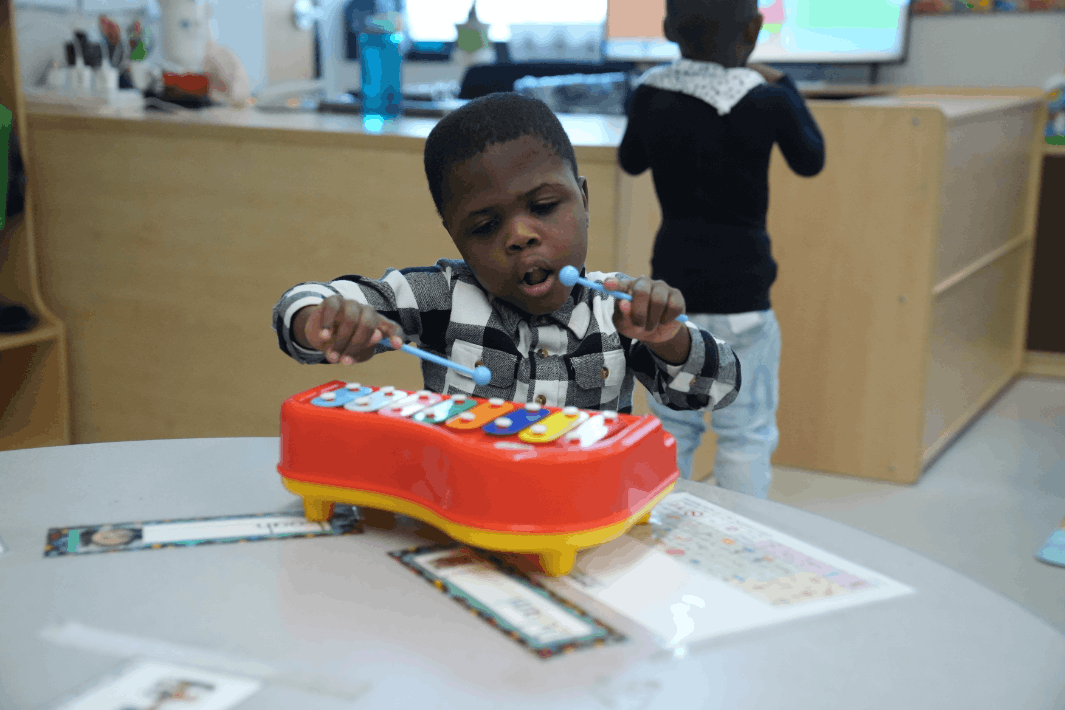
Nearly Four Decades of Demonstrated Results
The CLC has served children and families in Brooklyn for nearly four decades. The Brooklyn CLC served 93 children in 2024 and continues to grow in response to community demand. This proven model — refined over decades of practice — is what HKS is now bringing to Long Island.
Carol Giaco, Speech-Language Pathologist:
I’m Carol. I’m a speech-language pathologist. I’m also an assistive technology professional. We do speech therapy sessions usually three times a week. The speech therapists are usually trying to set kids up with some form of augmentative and alternative communication, or AAC. That can look a lot of different ways. For some kids it might be an iPad or a specific type of speech-generating device that they can use to communicate, for those kids who are either non-speaking or complex communicators who are learning to speak and who just need a little extra help being understood.
Ray, Parent:
He was almost fully nonverbal before he started school here, like maybe one or two words at a time that he would use. Five months after we started here, he’s putting together sentences. His verbal abilities have just exploded since he started coming here and getting the proper therapies.
Megan McKean, Occupational Therapist:
Hi, my name is Megan McCain. I am an occupational therapist at the Children’s Learning Center. We have a lot of kids who have communication needs, sensory needs, delays in fine motor skills. We have kids that have visual impairments, whether that be full blindness or cortical visual impairment. And we have some kids that have severe and multiple disabilities, so they have more physical impairments and require physical therapy in addition to OT and speech therapy.
Rainbow, Parent:
They did so many great extracurricular activities. In the summer they did a beach day and they set up an entire beach experience for the kids in the school. They had them in bathing suits and going to the pool, a little kiddie pool indoors. I don’t think that every program has those resources, and I think that the staff here is so supportive.
Liz Gunn, Physical Therapist:
I am a physical therapist. I work in the preschool primarily. We do work with the students. They all have IEPs. They all have mandated services, but really our biggest thing is collaborating with the teachers during the day, doing a lot of collaboration with our parents to use our strategies or activities that we would use to promote them in the educational environment. PT is more the walking, running, jumping, climbing the stairs to and from the bus.
Avien Henry, Principal:
Whether it is a concern with your child’s speech and language development, a concern with their physical development as it relates to fine or gross motor, even sensory issues that your child may be going through, feeding issues, those type of things. We have the staff that are able to help you along the way.
Tamika, Parent:
I don’t want to be cliché, but I know every parent of a nonverbal autistic child is looking for somewhere for their child to rest where they know that they’re safe and they’re not going to be hurt. The people there are patient and understanding, and they know what they’re doing. I know that’s what all autistic parents want. We’re just always waiting for that moment to take a breather and we could go to work or get some chores done at home and just know our children are in safe hands. And that is what we felt coming here.
They look for the light in your child and actually try to bring that out. If you’re looking for someone to care for them as if they were at home, this is the place.
Avien:
We are so excited to be bringing our multidisciplinary model to Long Island. Our teachers of the visually impaired, special educators, and our related service providers including speech therapists, occupational therapists, and physical therapists will work together to ensure that our students are getting the best education possible.
Tamika:
I’m so happy that my daughter has found her place at Helen Keller Services Children’s Learning Center.
[End]